Broken should look obviously broken.
Every line of the network reports into one health surface: datasets, pipeline runs, logs and deployed models. When something fails, it fails loudly — with lineage attached, not just a timestamp.
Four questions, asked continuously.
The same four questions a careful engineer would ask by hand, asked around the clock over every dataset — with each answer scored, recorded and rolled up into one organization health number. An incident has a before and an after, not just a moment.
- Freshness Did the data arrive when it was supposed to?
- Volume Did the right amount of it arrive?
- Schema Is it still the shape everyone agreed on?
- Drift Do the distributions still look like themselves?
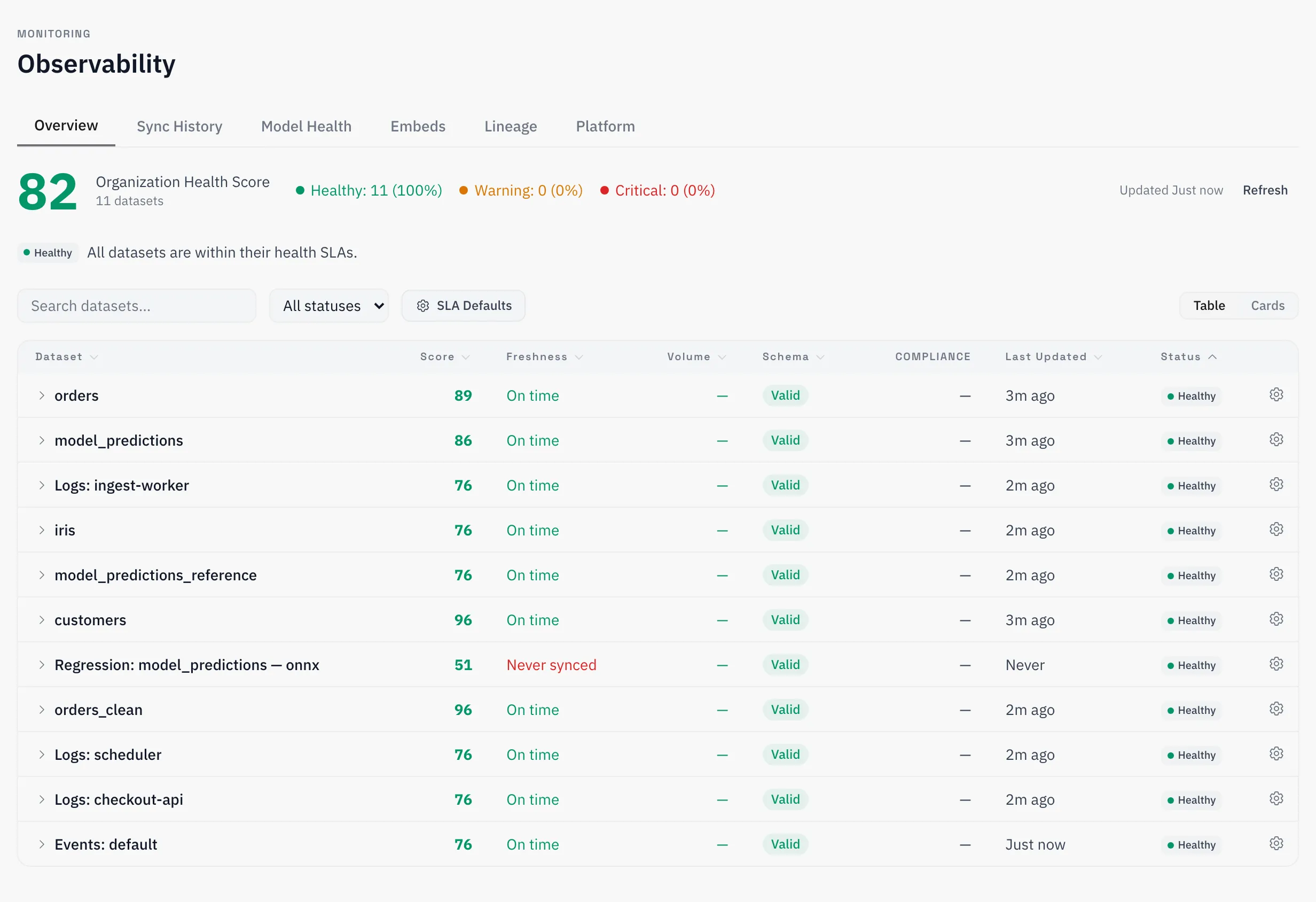
Every line reports to this platform.
This page of the app is where the network's state converges — the one place an operator checks in the morning. Each signal keeps its own home; the surface is the interchange.
From alert to root cause in one graph.
A drifting model is rarely the model's fault. Because health and lineage share a graph, the walk from a firing alert to the upstream load that caused it is a series of clicks — and the same walk forward names the dashboards the failure is about to reach.
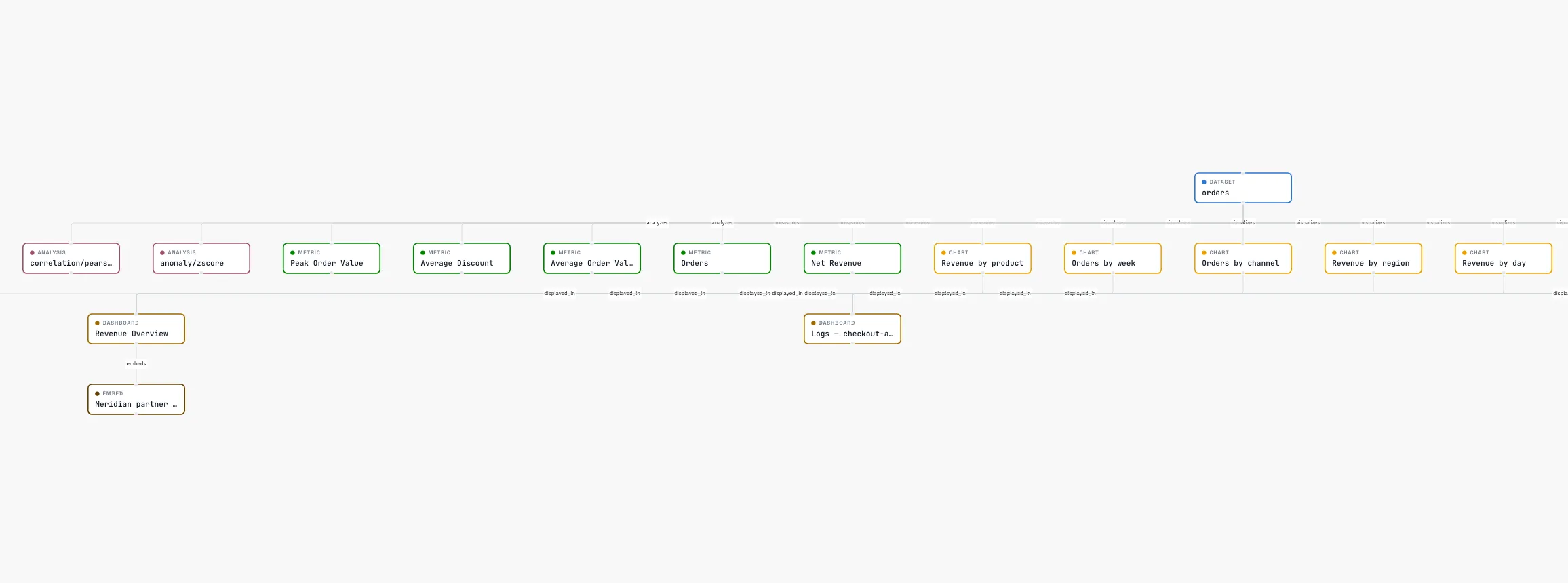
Standalone observability watches. AZ-Five can act.
A monitoring vendor bolted onto someone else's warehouse can only tell you a table looked wrong. Because this surface lives with the data, a failing check can hold a schema change at the door, badge every downstream dashboard, and fire the repair pipeline — before the number gets read, not after.
Know before the dashboard does.
Upload a dataset and the four questions start getting asked immediately.