The whole product-analytics stack, on the same tables.
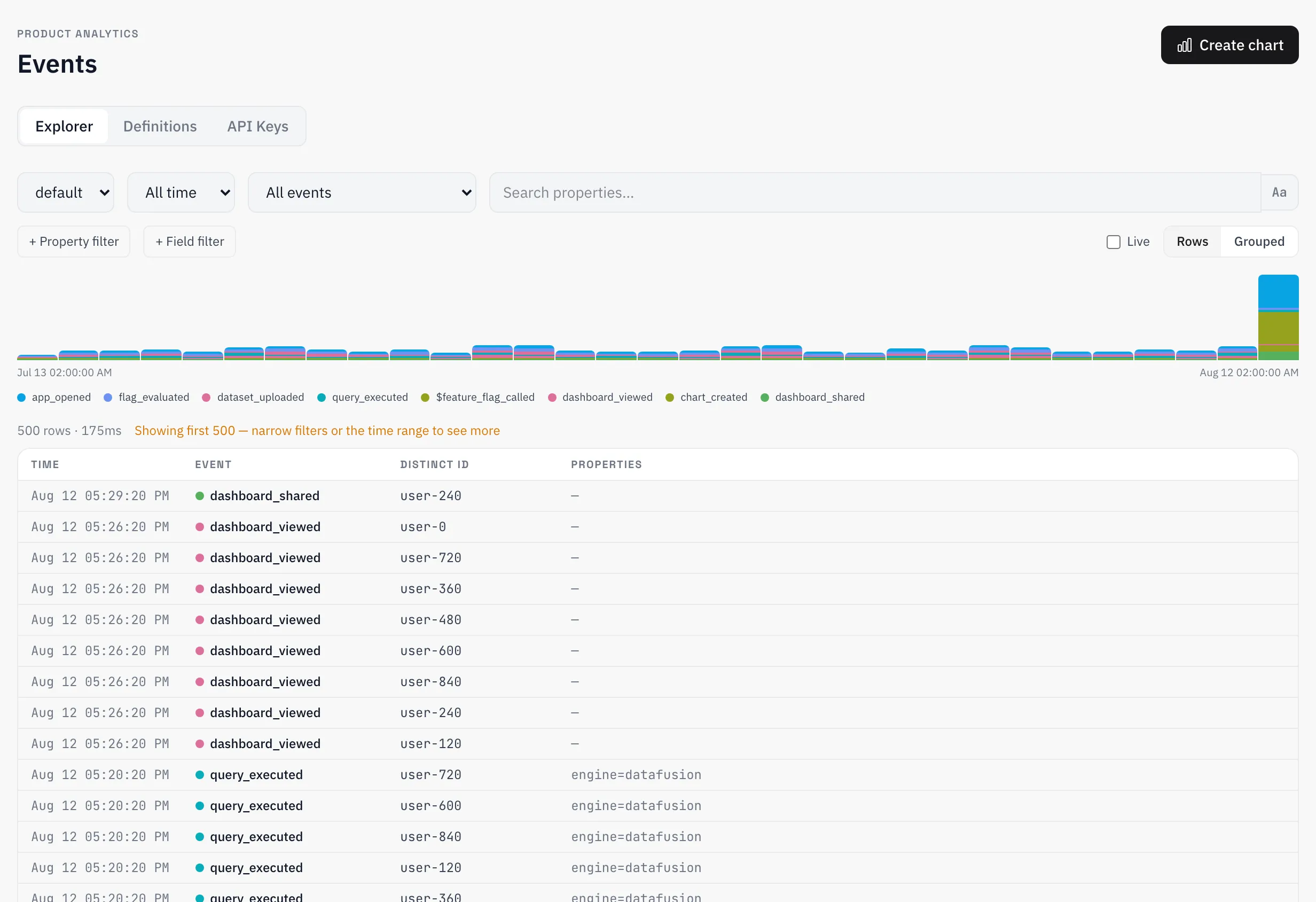
Events, funnels, replay, flags, experiments, surveys and logs — the things you would otherwise buy separately, reading the same governed measures as your revenue dashboard. A malformed event never becomes a confident wrong decision.
Eight SDKs. One tracking plan. Enforced.
Capture from web, iOS, Android, React Native, Flutter, Go, Python and the JVM — every SDK implementing one specified contract, verified against shared golden vectors. The tracking plan is enforced at ingestion, so an event that drifts from the plan is caught at the door, not discovered in a broken funnel.
8 CAPTURE SDKS · ONE BEHAVIOURAL SPEC · ENFORCED AT INGESTION
From number to reason.
A funnel tells you where people stop; a replay shows you why; a survey lets you ask. All three read the same event stream, so the path from “conversion dipped” to “here's the session where the button didn't render” stays inside one tool.
- Funnels + retention Conversion and retention measures over the same tables your BI reads — a funnel step and a revenue number can finally share a definition.
- Session replay Watch the real session behind a number. Replays capture the interactions, respect masking rules, and link back to the person and their events.
- Surveys In-product questions — ratings, choices, free text — targeted like a flag and analysed in place, next to the behaviour they explain.
Rollouts with the receipts attached.
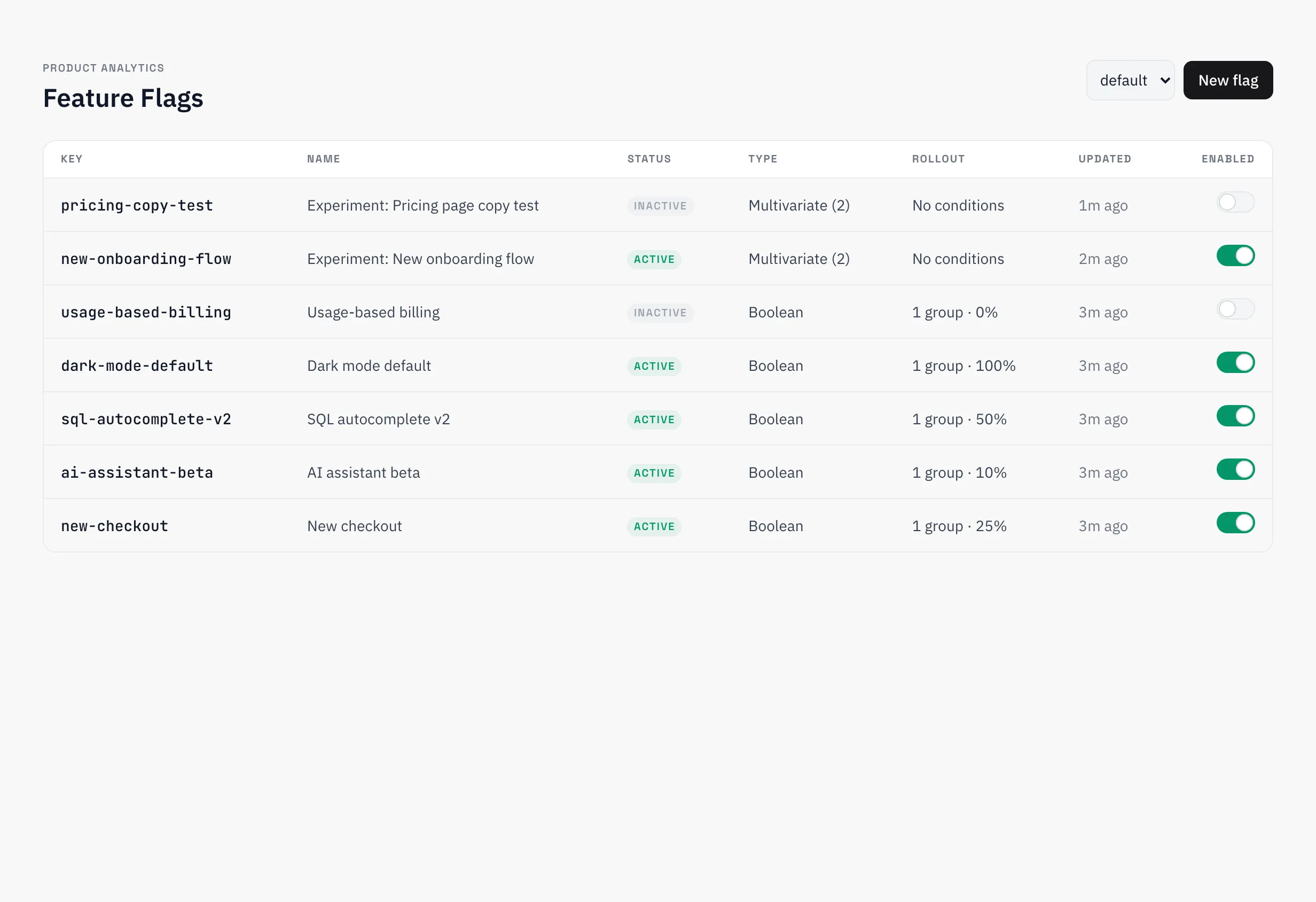
Targeted rollouts by percentage and property, evaluated by the same SDKs that capture events — so every flag decision is also an exposure record, and “who saw this?” always has an answer.
Experiments with honest statistics.
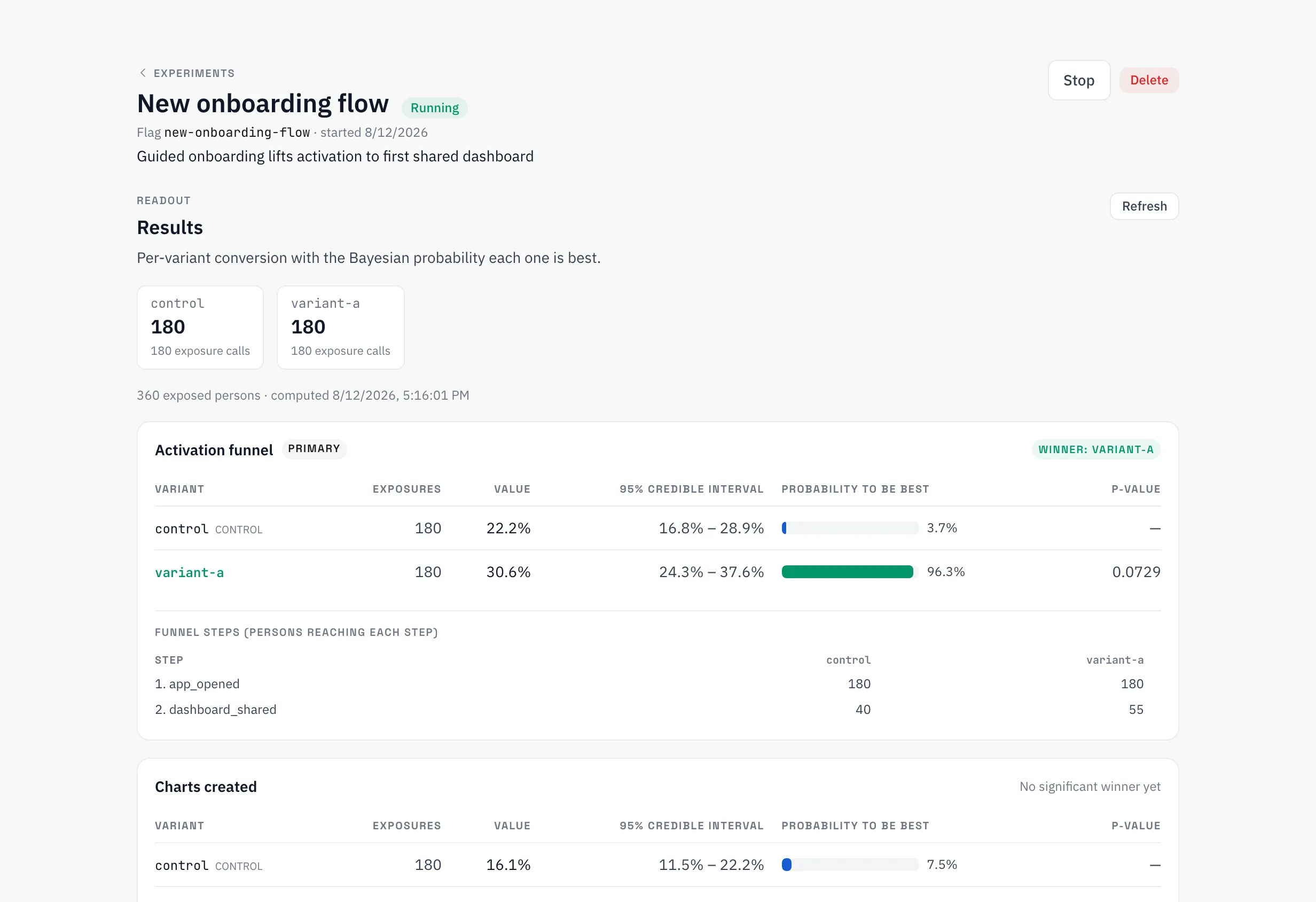
A/B tests run on flag exposures, with Bayesian probabilities and frequentist p-values side by side. Persons who saw more than one variant are excluded — not quietly counted twice — and the exclusion count is printed on the result.
Your application logs, next to the events.
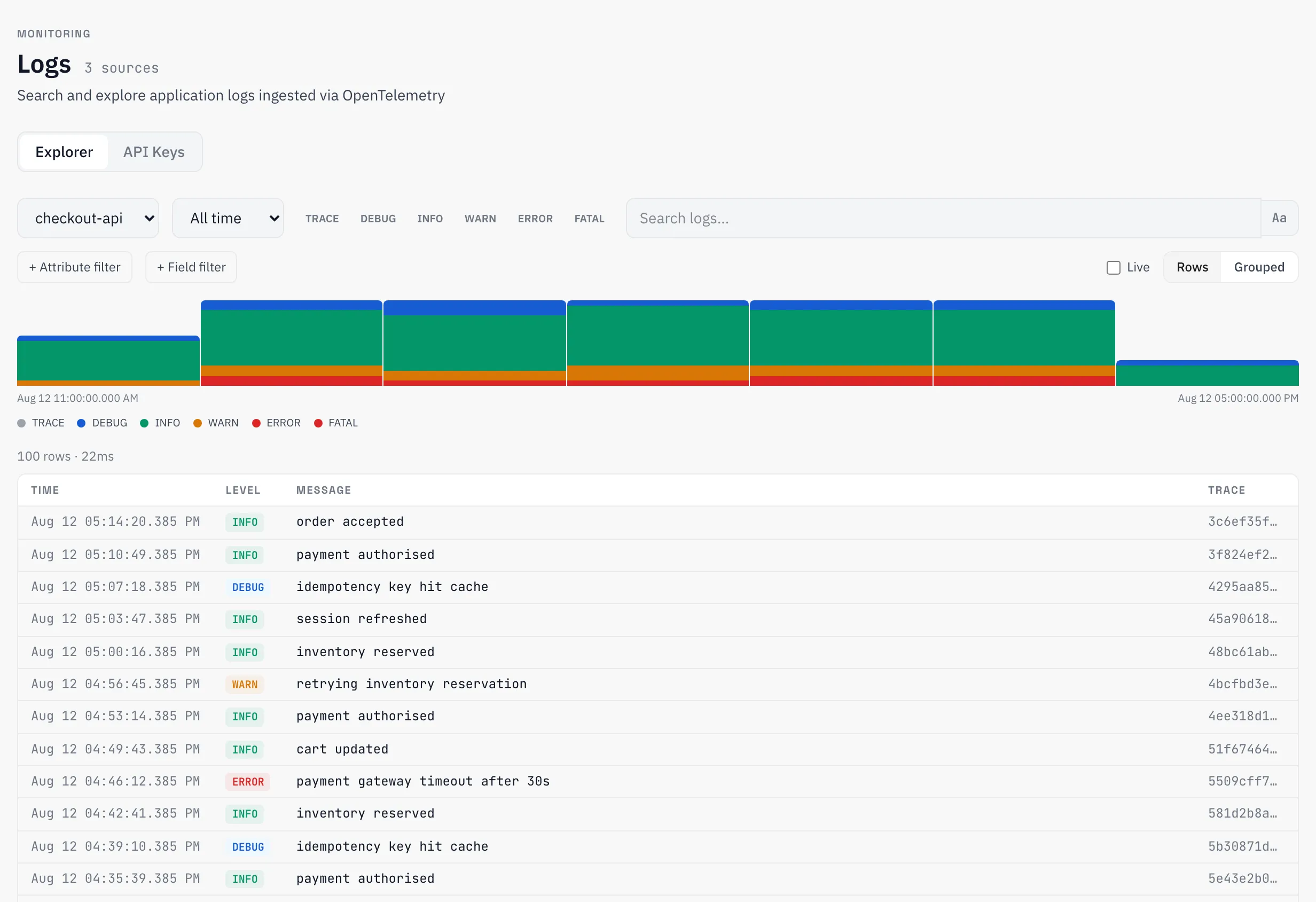
Ship structured logs over OpenTelemetry and tail them live — severity histograms, trace IDs, attribute filters and full-text search, in the same workspace as the product events they explain. One less vendor between a user report and its stack trace.
One workload on the platform. Not the whole platform.
Product analytics vendors sell this as the entire product. Here it is one line of six — which means your activation funnel, your revenue dashboard and your model's drift monitor agree on what a customer is, because they read the same tables.
Instrument once. Trust it everywhere.
Drop in an SDK, declare your tracking plan, and watch events arrive already validated.